Definition, challenges related to enrichment, and clinical significance.
Circulating tumor cells (CTCs) are cancer cells that detach from a primary or metastatic tumor and enter the bloodstream, where they can travel to distant organs and give rise to new tumors. These cells were first observed as early as 1869 ¹ in the blood of a cancer patient, long before the biological mechanisms underlying their dissemination were understood.
A CTC emerges when a tumor cell loses the adhesion properties that normally keep it anchored within the tumor mass. This process is closely associated with the epithelial to mesenchymal transition (EMT), during which epithelial tumor cells acquire migratory and invasive properties, detach from the primary tumor, and then enter blood or lymphatic vessels (intravasation). Once present in the peripheral blood, these cells are defined as CTCs: viable, nucleated tumor cells.
Directly accessible through a simple blood draw, CTCs have become one of the key biomarkers of liquid biopsy. Liquid biopsy is a simple test that uses a blood sample to analyze biomarkers released by tumors.
1
2
3
Circulating tumor cells are the main drivers of metastatic dissemination. They are cancer cells that detach from the primary tumor and travel through the bloodstream to distant organs. However, only a small fraction of these cells possesses true metastasis-initiating capacity. To achieve this, a CTC must survive the mechanical forces of blood flow, oxidative stress, and continuous immune surveillance long enough to reach a distant site.
Once a CTC reaches a distant organ, it can infiltrate the target tissue (extravasation) and become what is known as a disseminated tumor cell (DTC). A DTC does not necessarily develop into a metastasis immediately. For example, in the bone marrow and other tissues, DTCs can persist in a dormant, non-proliferative state for months, years, or even decades before becoming reactivated and giving rise to a clinically detectable metastasis. This phenomenon partly explains why relapse can occur long after apparent remission.
Taken together, these findings show that CTCs play a central role in metastatic progression while also serving as accessible biomarkers for monitoring the disease they contribute to spreading.
Understanding metastatic progression
Development of new cancer treatments
Identification of new therapeutic targets
Real-time dynamic monitoring of the disease
Development of experimental models
In recent years, the clinical relevance of circulating tumor cells has been extensively studied, with promising results at different stages of the patient care pathway.
Today, CTCs cannot be used on their own as a unique and standardized diagnostic tool for solid cancers. Nevertheless, they remain a highly promising tumor biomarker that could complement existing tools to help refine and confirm uncertain diagnoses.
For example, PSA (prostate-specific antigen) testing illustrates this challenge. PSA is used as an alert signal during prostate cancer screening. However, an elevated PSA level does not necessarily indicate the presence of cancer, as conditions such as prostatitis or benign prostatic hyperplasia can also cause PSA levels to increase, potentially resulting in a significant number of false-positive results.
Combining an elevated PSA level with another tumor biomarker, such as CTCs, could help better identify patients at higher risk.
One study showed that combining the detection and enumeration of PSA-expressing CTCs with blood PSA testing increased the positive predictive value of the test from 25% (PSA alone) to 99%, significantly reducing the risk of false-positive results and unnecessary biopsies ².
Today, treatment response is mainly assessed through medical imaging and clinical monitoring of the patient’s overall condition. However, these approaches may require several months before a therapeutic response or disease progression can be identified.
CTCs are a particularly promising biomarker for monitoring the effectiveness of anticancer treatments at an earlier stage and on a more regular basis. A decrease in CTC count after treatment initiation is generally associated with a better therapeutic response and a more favorable prognosis. Conversely, the persistence or increase of CTCs may indicate treatment resistance before it becomes apparent on medical imaging.
A prospective study followed patients with metastatic breast cancer by measuring their CTC levels every 3 to 4 weeks, alongside standard radiological monitoring performed every 9 to 12 weeks. The results showed a statistically significant correlation between CTC levels and disease progression, both in patients receiving chemotherapy and those receiving hormone therapy, with CTC levels often changing before visible signs appeared on imaging. A threshold of 5 CTCs per 7.5 mL of blood was strongly associated with subsequent disease progression ³.
Periodic monitoring of CTCs can therefore help adapt treatment strategies more rapidly, avoid continuing ineffective treatments, and improve patient management.
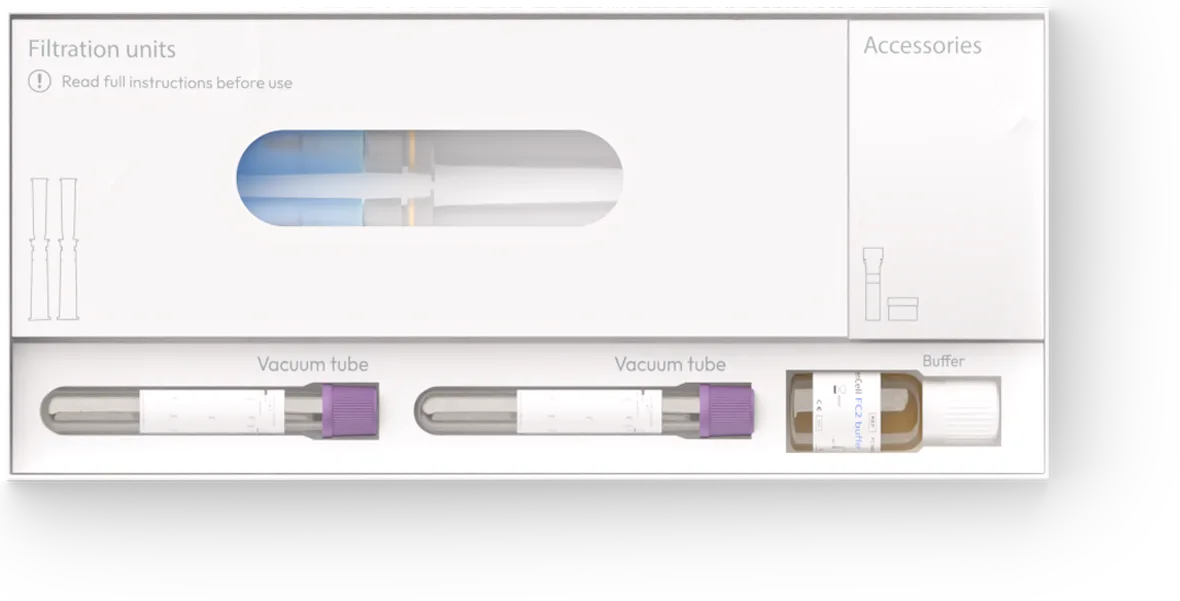
The choice of technique used to detect and enrich circulating tumor cells (CTCs) from a blood sample is critical. The selected method directly determines the type of cells captured and the nature of the information obtained.
Today, two main approaches can be distinguished.
The most widely used approach relies on immunoaffinity. It uses specific antibodies that target surface markers expressed by tumor cells. In particular, the epithelial protein EpCAM can be used to target carcinomas, including breast, lung, and liver cancers.
This approach benefits from extensive clinical validation. However, it only captures cells expressing the targeted marker, potentially missing cells that have undergone an epithelial to mesenchymal transition (EMT) and therefore express lower levels of epithelial markers.
To overcome dependence on specific markers, other methods rely on the physical properties of CTCs, such as their size or deformability.
Because they do not require the expression of any specific antigen, these approaches can isolate a broader range of elements, including CTCs with low EpCAM expression or those that are completely EpCAM-negative.
From a technological perspective, ScreenCell uses a patented size-based microfiltration system designed to provide an optimal balance between purity and recovery.