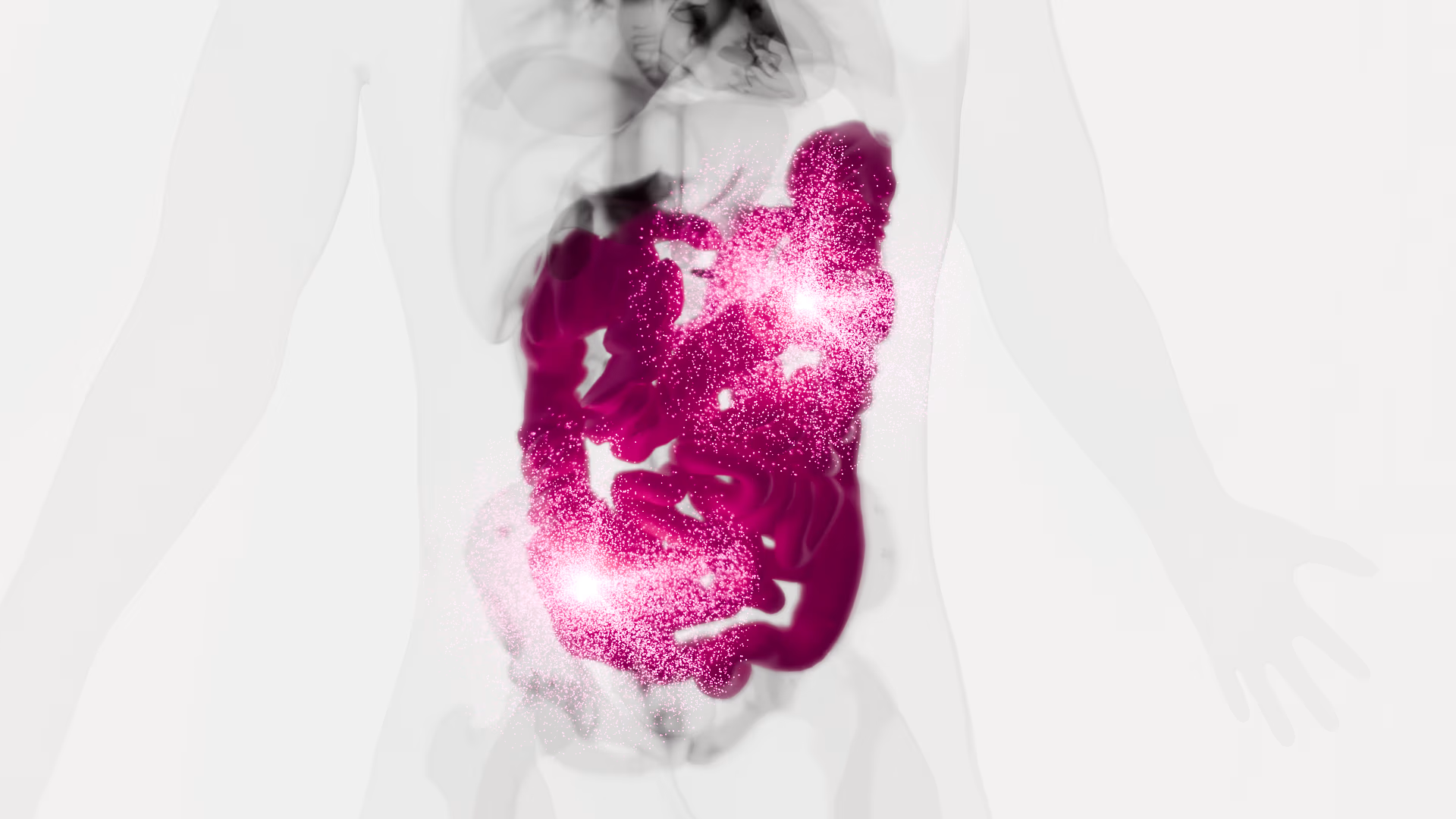
Colorectal carcinomas in 2013: the search for powerful prognostic markers is still on the go!

Julien Coget, Francesco Borrini, Sergiu Susman, Jean-Christophe Sabourin
DOI: 10.3233/CBM-130378
PMID: 24878815

Abstract

Colorectal cancer (CRC) is the third cause of cancer worldwide after prostate cancer and breast cancer. Patients have a survival rate of 5 years, which varies between 10 and 95% depending on CRC stage. Today, the management of patients with CRC is based on parameters such as TNM and classic histologic parameters, but new molecular and cell markers have been created to improve treatment and survival. Determining the expression of a characteristic set of genes either from formalin-fixed paraffin-embedded tissue (Onco type DX test™) or from fresh tissues (AGENDIA© ColoPrint®) has led to encouraging results, but there is a need for clinical validation on a large number of patients. Also, next-generation sequencing (NGS) technologies may be the next step in the molecular approach of CRC tumor samples, allowing tumor characterization by gene signature arrays. In addition to molecular markers, evaluation of the presence of cellular markers such as circulating tumor cells (CTC) in the blood of patients with CRC can optimize prognostic evaluation and response to treatment. CTC isolation methods used today have different sensitivities and specificities, due not only to the very small number of these cells but also to the epithelial-mesenchymal transitional process (EMT). This paper presents the preliminary results of our study conducted on CTC isolation in patients with CRC by filtration method (Screencells Cyto®). This fast and efficient method identifies CTCs and also isolates cells in EMT, which explains its high efficiency compared to technologies based on immunomagnetic and microfluidic separation reliant on EpCAM presence on the cell surface.

Keywords

Colorectal carcinoma CRC,, circulating tumor cells CTC, epithelial-mesenchymal transitional process EMT, biomarkers

Stay informed about our publications

Lastest publications

Isolation and profiling of single circulating tumor cells in myeloma: a new workflow for liquid biopsies.

Liquid biopsy in breast cancer: Redefining precision medicine

Optimizing Detection of Circulating Tumor Cells in Breast Cancer: Unveiling New Markers for Clinical Applications

A project on circulating tumor cells?

From isolation to downstream analysis, ScreenCell® adapts to each step.

Follow ScreenCell on

linkedin logo